Stream It Yourself: How Canadian Platforms Are Rewriting the Rules of What We Watch
There's a moment that happens to a lot of Canadians somewhere around the third scroll through a Netflix homepage — that creeping sense that none of this was really made for you. The accents are wrong, the geography is vague, and the cultural references land just slightly off-centre. It's not bad content. It's just not ours.
That gap — between what the American streaming giants offer and what Canadian audiences actually hunger for — has quietly become one of the most interesting creative spaces in the country. And a growing number of homegrown platforms, production companies, and individual creators are rushing to fill it.
Crave and the Case for Prestige Canadian Television
Let's start with the heaviest hitter in the domestic streaming ring. Crave, Bell Media's flagship platform, has been doing something genuinely impressive over the past few years: threading the needle between international co-production ambition and distinctly Canadian sensibility. Shows like Sort Of and Transplant didn't just perform well at home — they earned international distribution deals and critical praise that put them in the same conversation as prestige American cable drama.
What makes that significant isn't just the quality. It's the model. These productions were built with Canadian creative leads, Canadian crews, and Canadian funding structures — then exported outward rather than imported in. That's a meaningful inversion of how things used to work, and it signals something shifting in the global content economy.
Crave isn't perfect. Its interface has been a running joke in Canadian pop culture for years, and its HBO licensing relationship means a chunk of its appeal is still borrowed American prestige. But the original content pipeline is maturing fast, and the platform is increasingly a place where Canadian stories find their footing before going global.
CBC Gem: The Underdog With the Deepest Cultural Roots
If Crave is playing the prestige game, CBC Gem is doing something quieter and arguably more radical — functioning as a living archive and incubator for the kind of content that doesn't have a natural home anywhere else.
Gem has become a genuine destination for Indigenous storytelling, regional Canadian voices, and experimental formats that commercial platforms wouldn't greenlight in a million years. Series like Trickster and documentary projects from filmmakers across the country have found audiences through Gem that they simply wouldn't have reached through traditional broadcast windows.
The platform's strength is also its challenge: it's publicly funded, which means it operates under a mandate that prioritises cultural representation over pure engagement metrics. That's a genuinely different value system from what Silicon Valley built its streaming empires on, and it produces genuinely different content. Whether that's a bug or a feature depends entirely on what you think streaming is for.
For a lot of Canadians — especially those outside the Toronto-Vancouver-Montreal axis that dominates most of the industry — Gem is the first time they've seen their region, their community, or their cultural experience reflected back at them through a screen. That's not a small thing.
The Creator Economy Is Doing Its Own Thing Entirely
Beyond the institutional platforms, something even more decentralised is happening across YouTube, Twitch, and an expanding universe of direct-to-audience channels. Canadian creators — particularly in gaming, comedy, music, and documentary — have been building sustainable careers and loyal fanbases without waiting for a network to greenlight them.
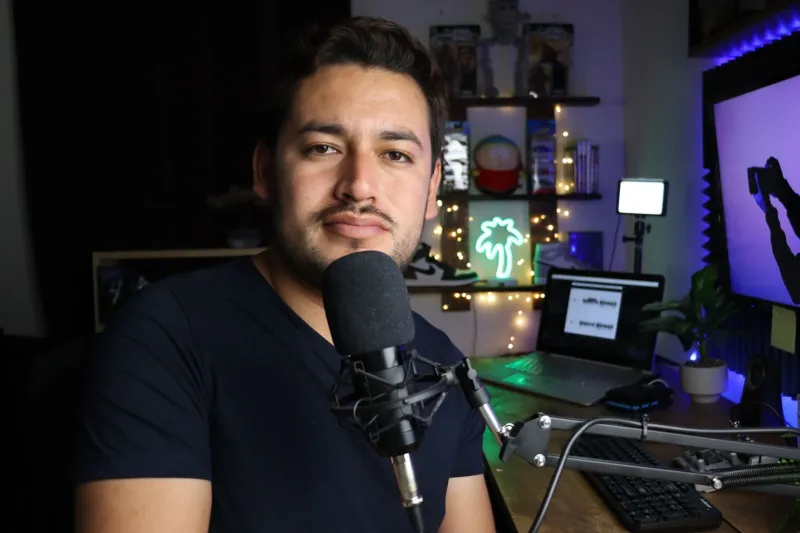
Creators like Jaime Nebot and the broader ecosystem of Canadian YouTube documentarians have demonstrated that long-form, thoughtful content about Canadian subjects — history, politics, geography, culture — can pull serious international viewership when the production quality and storytelling are there. The old assumption that Canadian stories were only interesting to Canadian audiences is being disproven weekly.
Twitch tells a similar story. Canadian streamers have carved out significant corners of that platform, and the community structures they've built often reflect something distinctly Canadian in tone — less aggressive, more collaborative, more likely to platform smaller voices alongside bigger ones. Whether that's a cultural trait or just a coincidence is a fun argument to have, but the pattern is noticeable.
The Co-Production Play: Going Global Without Losing the Plot
One of the most strategically interesting moves in Canadian screen culture right now is the international co-production model — partnerships between Canadian production companies and European, Australian, or UK broadcasters that allow for bigger budgets while preserving creative control.
Canada's treaty co-production agreements with over fifty countries give domestic producers a structural advantage that most American independents simply don't have. A Canadian company can co-produce with a French broadcaster, access Telefilm Canada funding, and still maintain the creative and cultural specificity that makes the project distinctly Canadian. That's a genuinely powerful position in a global content market where streamers are increasingly hungry for non-American stories that still have production values audiences expect.
Production houses like Shaftesbury, Boat Rocker, and Sphere Media have been quietly building international relationships that position Canadian content not as a niche curiosity but as a premium export. The global appetite for stories that aren't filtered through the American lens is real and growing — and Canada, with its multicultural population and bilingual creative infrastructure, is extraordinarily well-placed to supply them.
So What Does the Audience Actually Want?
Here's the honest tension at the centre of all of this: Canadian audiences are not a monolith, and not every Canadian wants the same thing from a streaming service. A significant portion of the population is genuinely happy watching American content, and there's nothing wrong with that. Culture doesn't have borders.
But there's also a growing, vocal appetite for content that reflects the specific texture of Canadian life — the particular humour, the regional tensions, the multicultural urban reality, the vast and complicated relationship with land and history. And that appetite isn't being fully served by platforms optimising for the broadest possible global audience.
The platforms and creators that figure out how to meet that appetite — authentically, without the self-conscious awkwardness that used to plague a lot of CanCon — are the ones building something that lasts. Not because they're obligated to by a broadcast regulator, but because they've found an audience that's genuinely hungry for what they're making.
That's the real streaming revolution. Not the platform wars or the licensing deals or the subscriber numbers. It's the slow, steady realisation that Canadian stories, told well, don't need Hollywood's permission to find the world.
They just need somewhere to live.