No Label, No Problem: Inside Toronto's Booming DIY Music Movement
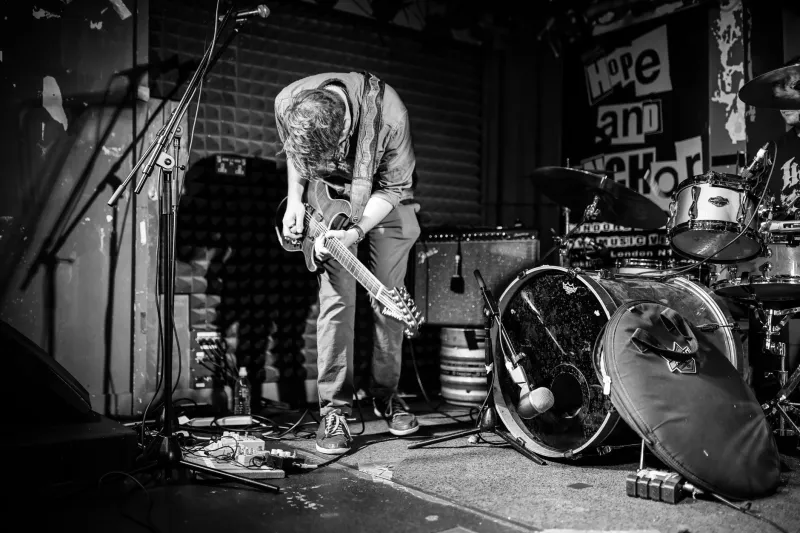
There's a basement on Bloor Street West — cramped, a little sweaty, lit by a single string of warm Edison bulbs — where something genuinely exciting is happening on a Tuesday night. A producer who goes by Sable Meridian is hunched over a laptop, running a beat-making workshop for a dozen artists who paid exactly zero dollars to attend. Nobody's getting a record deal here. Nobody's waiting for one, either.
This is the new Toronto underground, and it's thriving.
Across the city — and honestly, across the country — a generation of Canadian musicians is quietly dismantling the traditional model of what it means to "make it" in the music industry. They're self-releasing albums, building micro-communities, monetizing their craft through Bandcamp drops and Patreon subscribers and merchandise runs that sell out in 48 hours. They're doing it without A&R reps, without major distribution deals, and — perhaps most importantly — without asking for permission.
The Old Dream Is Dead (And That's a Good Thing)
For decades, Canadian artists chased a very specific version of success: get signed, get played on MuchMusic, maybe score a Juno, and if you were lucky enough, crack the American market. The pipeline was narrow, the gatekeepers were plentiful, and the creative compromises were part of the deal.
That model hasn't just evolved — it's fractured. And the artists filling those cracks are doing some of the most interesting work this country has produced in years.
"I genuinely don't think about labels the way my parents' generation did," says Dela Osei, a 26-year-old R&B artist who released her debut EP last spring entirely through her own imprint, Coral Noise Records — a name she admits she invented in her Notes app at 2 a.m. "I have Spotify for Artists. I have DistroKid. I have Instagram. What exactly am I waiting for someone else to do for me?"
Osei's EP has racked up over 80,000 streams. She's played two sold-out shows at Monarch Tavern. She keeps 100 per cent of her masters.
Community as Infrastructure
What makes Toronto's DIY scene distinct isn't just the technology enabling it — it's the collective infrastructure artists have built around each other. Collectives like Brown Girl Collective TO, Black Spatial Remix, and the loosely organized but fiercely loyal Scarborough Sounds network have created ecosystems where artists share resources, rehearsal space, graphic designers, and audiences.
It's a gift economy layered over a real one.
"We're not anti-commercial," explains Marcus Tran, one of the organizers behind a monthly showcase called Open Circuit that rotates between three east-end venues. "We're just building the commercial on our own foundation. When we help each other, we're not giving something away — we're investing in a scene that pays us back."
That ethos has real financial logic behind it. When five artists share a single PR push, the cost per artist drops dramatically. When a collective pools resources for a music video shoot, the production value goes up while individual expenditure goes down. The math, when you actually run it, starts to make sense.
The Economics of Independence
Let's talk money, because that's where the conversation gets real.
Streaming revenue alone is notoriously brutal — even Spotify's most-streamed independent artists will tell you the per-stream payout is functionally insulting. But the DIY artists building sustainable careers in Toronto aren't relying on streaming as their primary income. They're thinking like entrepreneurs.
Merchandise. Live performance. Sync licensing. Brand partnerships with local companies that actually align with their values. Teaching. Session work. Beat sales. The income streams are deliberately plural, deliberately diversified.
Jasmine Kowalski, who produces under the name Foxglove and has collaborated with several artists adjacent to the MUNA extended universe of indie-pop, describes her financial model as "a constellation, not a spotlight."
"There's no single thing that pays my rent," she says, laughing. "There's like seven things that together pay my rent. But I own all of them. Nobody can pull the rug on me."
For Kowalski, that ownership extends beyond finances into creative territory. She's turned down two licensing offers in the past year because the brand associations didn't feel right. That kind of decision — the ability to say no — is, she argues, the real currency of independence.
Redefining the Metrics
One of the most radical shifts happening in Toronto's underground is a wholesale reimagining of what success looks like. The old metrics — chart positions, radio play, industry award nominations — are being replaced by something more personal and, arguably, more meaningful.
Artists are talking about things like: Does my audience feel genuinely connected to my work? Am I able to sustain this creative practice without burning out? Am I building something that will outlast a single viral moment?
"I went semi-viral on TikTok last year," says Osei. "It was cool for like three weeks. Then it was over, and I had to figure out who I actually was as an artist. The DIY community I'm part of — that's what helped me work through that. Not an algorithm."
This is the part that doesn't get talked about enough: the psychological infrastructure that independent scenes provide. The mentorship, the honest feedback, the shared language of people who are all figuring it out together.
What the Rest of Canada Is Watching
Toronto tends to dominate national conversations about Canadian music, sometimes unfairly so. But the DIY wave isn't contained to the 416. Montreal's francophone indie scene has been operating outside mainstream structures for years, with collectives like Bonsound setting a template that artists across the country have studied carefully. Vancouver's electronic underground has its own thriving ecosystem. Halifax, Winnipeg, and Calgary all have scenes that function on similar principles — community-first, ownership-focused, deliberately outside the traditional industry orbit.
What Toronto has, arguably, is scale and visibility. When something breaks in the Toronto underground, the rest of the country notices. And right now, what's breaking is a fundamental rethinking of the artist's relationship to their own work.
The Eclipse of the Old Guard
Here's the honest truth: the major label system isn't going away. It still controls enormous amounts of capital, distribution reach, and promotional infrastructure. There will always be artists for whom that system is the right fit.
But the underground isn't trying to replace it. It's doing something more interesting — it's making the traditional path feel optional. For a generation of Canadian artists who grew up watching the industry chew through talent and spit out cautionary tales, optional is everything.
In that sweaty basement on Bloor, Sable Meridian wraps up the workshop. Artists exchange numbers, share SoundCloud links, make plans to collaborate on something that hasn't been named yet. Nobody's waiting for validation from outside the room.
The music is already happening. The careers are already being built. The only thing that's changed is who holds the keys.
And in 2024, those keys belong to the artists.