Homegrown and Unstoppable: How Canadian Indie Film Found the World Without Hollywood's Permission
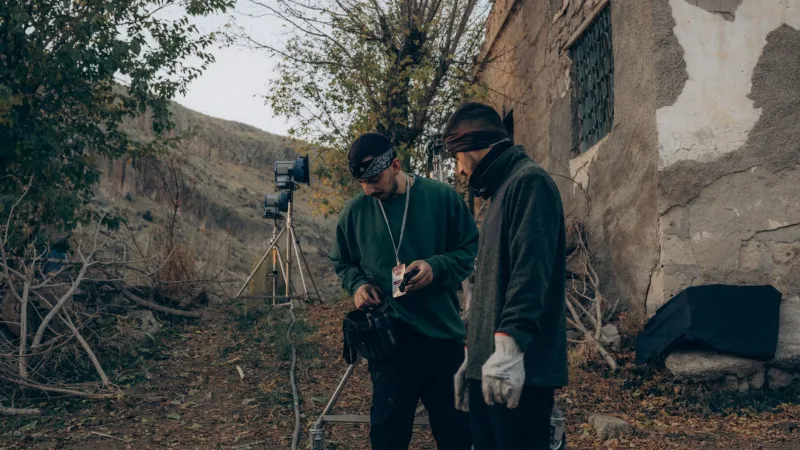
For a long time, the path for a Canadian filmmaker looked something like this: hustle through film school, pitch your heart out at TIFF, hope a distributor notices you, and then wait — sometimes for years — while a studio decided whether your story was "marketable enough" for a wide release. A lot of extraordinary films died in that waiting room. But something has shifted, and it's shifted fast.
The combination of streaming platforms hungry for original content and a generation of indie filmmakers who grew up on DIY culture has cracked the old model wide open. Canadian cinema isn't just surviving the disruption — it's thriving because of it.
The Studio Gatekeeping Era Is Quietly Fading
Traditional theatrical distribution always had a brutal math problem for Canadian stories. Studios, particularly the American majors with Canadian arms, tended to greenlight projects that felt universally digestible — which often meant sanding down the specific, weird, beautiful edges that make Canadian storytelling so compelling. Regional accents got softened. Rural settings got swapped for generic cityscapes. The result was a kind of cinematic identity crisis: Canadian films that didn't feel particularly Canadian.
That pressure hasn't disappeared entirely, but it's lost a lot of its leverage. When a filmmaker can pitch directly to Netflix, Crave, Amazon, or MUBI — or self-distribute through digital platforms — the studio's approval stops being the only path to an audience. The gatekeepers still exist, but they're no longer the only gate in town.
Streamers Are Betting Big on Canadian Voices
It's worth noting that not all streaming investment in Canada is created equal. Some of it is simply American content shot in Vancouver or Toronto for the tax credits, with Canadian crew doing the heavy lifting while the story itself has nothing to do with this country. That's legitimate work, but it's not the same as Canadian storytelling.
What's genuinely exciting is the growing appetite among platforms for content that is about Canada — regionally specific, culturally textured, and told from perspectives that haven't historically had budgets behind them. Crave has leaned into this with original productions that reflect a broader range of Canadian experiences. APTN's streaming arm has been a quiet powerhouse for Indigenous storytelling, amplifying voices that the mainstream industry chronically underserved. And internationally, platforms like MUBI have given arthouse Canadian films a global shelf life that a limited theatrical run never could have provided.
Directors like Kazik Radwanski (Anne at 13,000 ft, How Heavy This Hammer) have built international critical reputations through exactly this kind of platform-friendly, low-budget, high-specificity filmmaking. His work is resolutely Toronto — not a glossy, postcard Toronto, but a particular, unglamorous, deeply human version of the city — and it resonates globally precisely because of that specificity, not despite it.
The Indie Filmmakers Rewriting the Rules
Across the country, a wave of filmmakers is proving that you don't need a massive budget to make a massive impact. Sophie Dupuis, whose Québécois drama Souterrain earned widespread acclaim, represents a generation comfortable working within tight financial constraints while refusing to compromise on emotional ambition. Her films feel lived-in and urgent — qualities no amount of studio money can manufacture.
In Atlantic Canada, the filmmaking community has been quietly building momentum for years, with productions that capture the landscape and social textures of the region in ways that feel genuinely irreplaceable. Filmmakers working out of Halifax and St. John's are increasingly finding audiences through festival circuits and streaming deals that bypass Toronto entirely — a decentralisation of the industry that feels long overdue.
Indigenous filmmakers are perhaps the most striking example of what happens when storytellers get resources and creative control simultaneously. Directors like Danis Goulet (Night Raiders) and Elle-Máijá Tailfeathers (Stellar) are making genre-bending, politically charged work that is earning global attention while remaining deeply rooted in specific Indigenous experiences and perspectives. These aren't films made to explain Indigenous culture to a non-Indigenous audience — they're films made with full artistic authority, and audiences worldwide are responding.
TIFF Is Still the Launchpad, But It's Not the Finish Line
The Toronto International Film Festival remains one of the most important launching pads for Canadian cinema, and that's unlikely to change. But the relationship between TIFF and a film's commercial life has evolved. A TIFF premiere used to be almost exclusively about landing a distribution deal that would carry a film into theatres. Now, it's as likely to generate streaming acquisition buzz, international licensing interest, or the kind of critical attention that builds a director's profile for their next project.
Films like Polytechnique, Incendies, and more recently Antigone demonstrated that Canadian films can earn international awards recognition and find global audiences — but the newer generation is doing it with less dependence on the traditional theatrical window. The festival still matters enormously. It's just no longer the whole story.
What This Means for Canadian Culture
Here's the thing that gets lost in industry conversations about distribution models and platform deals: this shift is fundamentally about whose stories get told. When the gatekeeping power of major studios diminishes, the range of Canadian stories that can reach an audience expands. That means more films set in places that aren't Toronto or Vancouver. More stories told in French, Cree, Inuktitut, Punjabi. More genre films, more experimental work, more stories about working-class Canadians, queer Canadians, immigrant Canadians — all the versions of this country that the mainstream industry historically treated as niche.
The streaming era has its own problems, obviously. Algorithmic discovery is imperfect. Platform libraries shift constantly, and films can disappear without warning. The economics for filmmakers are still genuinely difficult. But the directional change is real: Canadian cinema is becoming more itself, not less, and it's finding the audiences to prove that specificity sells.
The Eclipser Take
Canadian film has always had something to say. The infrastructure just kept getting in the way. What we're watching right now is a generation of filmmakers who refused to wait for permission — who found new routes to audiences, new funding models, and new ways to tell stories that are unmistakably, unapologetically Canadian.
The big studios aren't gone, and they're not irrelevant. But they're no longer the sun that everything else orbits. Canadian cinema is building its own solar system, and honestly? It's about time.