The Loudest Room in Town Has a Card Catalogue

Photo: Press Information Department, Public domain, via Wikimedia Commons
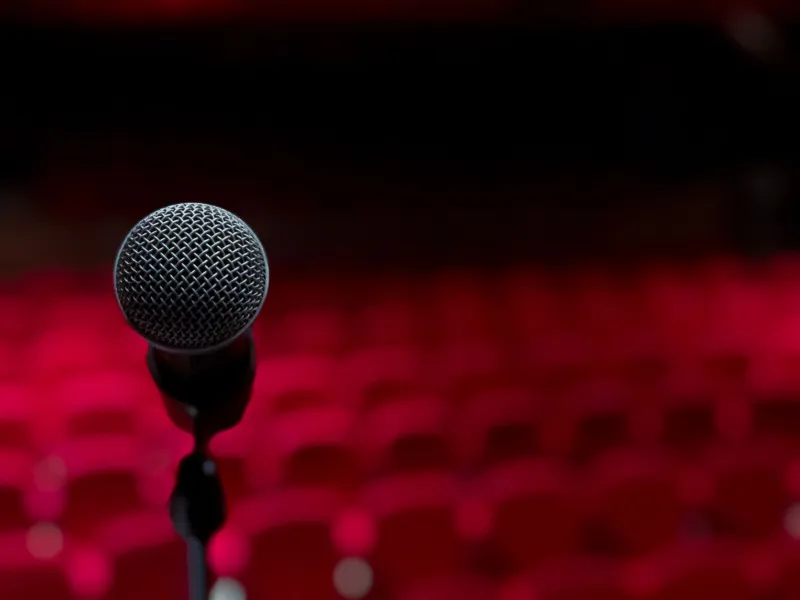
It's 8:40 on a Thursday night and there's a bass amp parked in front of a shelf of large-print romance novels. A trio from the neighbourhood is soundchecking with the volume turned down to "apologetic," a stack of folding chairs is filling up with teenagers, new Canadians, retirees and one guy who is very clearly just here to return a book. The librarian at the back is running a mic check with the calm of someone who has defused worse situations.
This is what live culture looks like in a lot of Canada right now — not a sticky-floored club with a $14 pint, but a public building with a coat rack, a water fountain and a borrowing desk. Library systems from Halifax to Victoria are booking musicians, comedians, poets, filmmakers and small theatrical productions into rooms that were engineered for quiet. And they're not doing it as a lark.
The Room Nobody Was Using
The pitch is embarrassingly practical. Clubs are closing or pricing out anyone who isn't a proven draw. Rental halls want insurance, a liquor licence and a $2,000 deposit. Meanwhile, every mid-sized Canadian city already owns a climate-controlled, wheelchair-accessible, transit-adjacent building with a stage-adjacent multipurpose room, a decent PA in storage and zero expectation of a bar tab.
The barrier was never physical. It was cultural. Libraries spent a century training the public to whisper, and the first wave of programmer-librarians had to spend a few years untraining them. The trick, according to the people doing the booking, is framing: these aren't concerts that happen to be in a library, they're library programs that happen to be loud. Once you call it a program, the room, the staff and the mandate all click into place.
Halifax's central branch, Calgary's and Winnipeg's downtown libraries all run variations on this now — after-hours series, noon-hour sets, film screenings that turn a lecture theatre into something closer to a rep house. Toronto's reference library has spent years proving that an author talk and a string quartet can share a mailing list without anyone's dignity getting hurt.
Why Librarians Are Weirdly Good At This
A booker at a club is trying to sell tickets. A library programmer is trying to hit a usage target and reflect a community, which produces genuinely different lineups. Nobody's chasing a genre. You get a queer choir on Tuesday, a Somali-language storytelling hour on Wednesday, an experimental noise set on Friday that would clear out a bar but plays beautifully to forty people who came in for the wifi and stayed.
There's also a stubborn commitment to access that the private sector can't replicate. All-ages by default. Free, or pay-what-you-can with no pressure. No last call, so the show is over by 9:30 and the last bus is still an option. For a parent, a sober listener, a teenager without a fake ID or anyone who finds a dark club exhausting, that's not a compromise — it's the entire point.
The Economics of a Free Room
Here's the part that should make commercial venue operators nervous and grateful at the same time. The library doesn't need the door. It needs the numbers — attendance, engagement, circulation spikes around featured artists — and those numbers go into a report that justifies next year's budget. Artists get paid from programming funds, grants and the occasional Friends-of-the-Library fundraiser. It is not a fortune. It is, crucially, sometimes more than they'd clear at a small club after gas.
The catch is that the model depends on institutional goodwill, and goodwill is a line item. A change in management, a budget cut, a complaint about noise from a councillor — any of those can end a series overnight. Several of the programmers I spoke with described their calendars as "one election away" from vanishing.
What the Calendar Actually Tells Us
Read a library events listing closely and you get a fairly brutal map of what's missing in a city. Comedy nights where there's no comedy club. Singer-songwriter sets where the nearest listening room is a ninety-minute drive. Documentary screenings in towns that lost their theatre in the nineties and never got it back.
The library didn't set out to become the last general-purpose cultural space in Canada. It just kept saying yes to rooms that everyone else stopped offering. And somewhere between the craft circle and the tax clinic, it accidentally built the most egalitarian live circuit in the country — one where the ticket is free, the doors are wide, and the only thing you have to whisper about is the return date on your holds.
If that's the future of community live culture, it's louder than anyone expected. Bring a card.