The Great Canadian Ink Machine: How Our Animators Quietly Drew the World's Favourite Shows
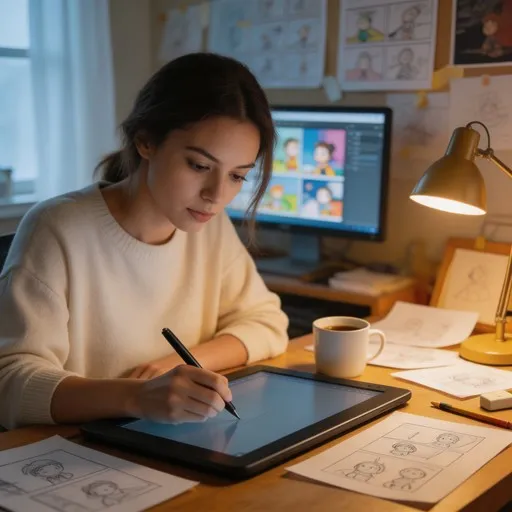
Photo: animator working at drawing tablet animation studio desk, via images.stockcake.com
Here's a party trick for your next hangout: pull up Avatar: The Last Airbender, Rick and Morty, or half the Disney XD lineup and ask your friends where they think it was made. Los Angeles, they'll say. Maybe Tokyo for the anime-heads. Almost nobody says Vancouver. Almost nobody says Halifax, Montréal, or Toronto, either. And that's exactly the point.
Canada's animation industry is one of the great open secrets of global entertainment — a massive, world-class machine hiding in plain sight, powering the biggest streaming platforms and studios on Earth while remaining essentially invisible to the audiences watching the results.
The Studio System Hiding in Plain Sight
Start in Vancouver. The city has quietly become one of the largest animation production hubs on the planet, home to major studios and satellite operations for American giants. Shows you assume came out of Burbank or Burbank-adjacent office parks were, in huge part, boarded, animated, and finished in Burnaby and Gastown by artists who often can't even talk publicly about half their credits due to studio NDAs.
Montréal runs a parallel operation, with a deep bench of VFX and animation talent that's helped the city become a go-to for Hollywood productions looking for world-class work at a favourable exchange rate. Toronto adds its own layer, from boutique indie studios to heavy-hitters doing work for streamers you definitely have a subscription to.
The reasons are partly economic — tax credits, a favourable dollar, trade agreements carved out decades ago — but economics alone don't explain quality. Canada built actual institutions: Sheridan College's animation program in Oakville is legendary, feeding talent into the industry for generations. Emily Carr, NSCAD, and a constellation of smaller programs keep the pipeline full. We didn't just attract animators. We trained them.
The Indie Underground Is Having a Moment
The studio story is only half of it. The other half is happening on YouTube, Newgrounds, and TikTok, where independent Canadian animators have been building cult followings that would make mid-tier record labels weep.
There's a particular Canadian flavour to this indie wave — a dry, self-deprecating, slightly unhinged sensibility that thrives precisely because these creators aren't answering to a network notes call. Small-town animators making shorts about Tim Hortons lineups, northern winters, and the specific psychic damage of Canadian childhoods are pulling millions of views from audiences who've never seen a snow shovel but recognize the feeling anyway.
The internet flattened distribution, and Canadian animators — long used to working behind the curtain for other people's IP — turned out to be shockingly good at front-of-house when given the chance.
The IP Problem Nobody Wants to Say Out Loud
But here's the uncomfortable part. Being the world's best animation workforce is not the same as owning the world's best animated shows. The credits roll, the residuals flow elsewhere, and the intellectual property — the thing that compounds in value for decades — lands in someone else's portfolio.
It's the same story this country has told itself about music, film, and publishing: we're brilliant producers and reluctant owners. The talent is here. The infrastructure is here. The question is whether the capital, the risk tolerance, and the policy will show up to keep the endings here too.
There are encouraging signs. Canadian-funded animated series are finding international buyers. Provincial and federal funding programs, imperfect as they are, have seeded projects that would never survive a purely commercial greenlight. And the indie creators building direct audiences are, in effect, doing end-runs around the whole ownership problem by becoming the IP.
What Would It Take?
Imagine a Canadian animated series that becomes a global phenomenon the way our musicians occasionally do — with the rights staying in Toronto, Vancouver, or Montréal instead of being optioned south within eighteen months. It's not impossible. It requires patient capital, distributors willing to hold rather than flip, and a cultural confidence that our stories don't need an American accent to travel.
The artists are already there. The machine is already built. The only thing left to animate is the will to own what we make.
The next time a show makes you laugh, cry, or rewind a frame to catch a background gag, there's a decent chance someone in this country drew it. Maybe it's time the world — and honestly, we ourselves — started saying that part out loud.