Accidentally Iconic: How Gen X Canadians Mining the Past Are Making the Coolest Content Online
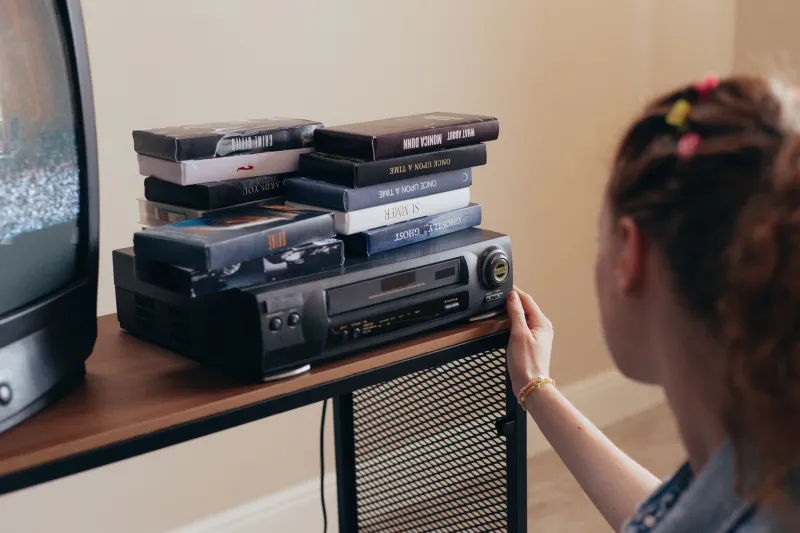
Somewhere in the middle of a YouTube rabbit hole, a 22-year-old in Hamilton stumbles onto a clip of a 1994 MuchMusic Video Dance Party. The VJ is wearing something that should not be described in polite company. The graphics look like they were designed by someone who just discovered what a gradient was. The whole thing has the low-budget, slightly chaotic energy of something that was never meant to be preserved.
She watches it three times. Then she goes looking for more.
This is happening constantly. And the people who understand why — and who are leaning into it deliberately — are building some of the most engaged audiences on the internet right now.
The Aesthetic That Wasn't Supposed to Come Back
Let's be clear about something: the 90s Canadian aesthetic was not cool at the time. Not in the way that New York or London cool was cool. MuchMusic had a scrappiness that the American MTV machine never quite had — partly by necessity, partly by design. CBC children's programming had a handmade quality that felt like it was made by adults who genuinely liked children, which is rarer than it sounds. Regional Canadian television, from local news sets to community access programming, had a visual language that was entirely its own: earnest, slightly awkward, and completely uninterested in being anything other than what it was.
That quality — call it anti-polish, call it sincere weirdness, call it the absence of trying — is exactly what a generation raised on algorithmically optimised content is desperately hungry for.
The Creators Who Figured It Out
The Gen X and older millennial creators who are winning with this content mostly didn't set out to build a brand strategy. They were just posting things they remembered and cared about.
A creator based in Sudbury, Ontario, started a YouTube channel a few years ago focused on Canadian television history — not the prestige stuff, but the regional oddities, the forgotten game shows, the Saturday morning blocks that aired on stations that no longer exist. His subscriber count grew slowly for years, then accelerated sharply when younger viewers started sharing clips in "weird TV" communities. He's now doing deep dives on things like the history of Canadian cable access programming and getting hundreds of thousands of views.
A Halifax podcaster who spent twenty years in community radio started a show about the history of Canadian music television and found herself with an audience that skewed dramatically younger than she expected. Her listeners weren't there out of nostalgia — they were there because the content felt like an archaeological dig into a culture that was genuinely foreign to them, and genuinely fascinating.
The pattern repeats across platforms. TikTok accounts dedicated to old Canadian commercial jingles. Instagram archives of regional newspaper arts coverage from the 80s. Newsletters about the history of Canadian independent film that read like love letters to a country that most of their subscribers have never visited.
Why Gen Z Is Biting
The generational appeal here isn't straightforward nostalgia — Gen Z has no memory of any of this. So what's actually happening?
Part of it is the anti-algorithm effect. Content that was created before the age of engagement optimisation has a texture that contemporary content often lacks. It wasn't made to go viral. It wasn't A/B tested. It wasn't designed to keep you watching for the next thirty seconds. That absence of manipulation is, paradoxically, deeply compelling to an audience that has grown up inside the machine.
Part of it is the Canadian specificity. In a media landscape dominated by American content, there's something almost exotic about programming that is unmistakably, unself-consciously Canadian. The regional accents, the specific cultural references, the way that Canadian content from that era often had a kind of civic sincerity that American programming didn't — all of it reads as authentically other in a way that resonates.
And part of it is identity. Young Canadians who are trying to figure out what Canadian culture actually is — distinct from American culture, distinct from British culture, distinct from the multicultural influences that shape contemporary Canadian cities — are finding something useful in this archive. It's a mirror, even if the reflection is blurry and wearing a very questionable blazer.
The Uncool Advantage
There's a useful concept here that creators are starting to articulate explicitly: the uncool advantage. Content that doesn't try to be cool carries a credibility that aspirationally cool content can never achieve. When a 50-year-old former Much Music devotee posts a twelve-minute video about the aesthetic history of Canadian music video production in 1992, they're not performing. They're not chasing a trend. They genuinely care about this, and that caring is visible in every frame.
Gen Z audiences are exceptionally good at detecting performance. They've grown up watching influencers, and they've developed finely tuned sensors for inauthenticity. The Gen X creators who are winning aren't winning because they've cracked a code — they're winning because they never tried to.
What This Says About Canadian Identity
There's a bigger cultural story underneath the algorithm numbers. The hunger for this content suggests something about how Canadians — particularly younger Canadians — are thinking about their own cultural identity.
Canadian culture has always had a complicated relationship with visibility. We've exported enormous amounts of creative talent, often without getting credit for it. We've defined ourselves partly in opposition to American culture, which is a strange foundation for a national identity. We've been told, for generations, that our cultural production is somehow secondary.
The Gen X creators mining their own pasts are, almost accidentally, making the case that Canadian culture was always interesting — that the scrappiness, the sincerity, the regional weirdness, the earnest ambition of a country trying to figure itself out on television and radio — was worth paying attention to. That it still is.
The fact that young people are agreeing, enthusiastically and in large numbers, feels like something. Maybe not a revolution. But definitely a moment worth watching.
Even if it's wearing a 1993 MuchMusic VJ jacket while it does it.