Composing With Frost: Inside Canada's Coldest Recording Studio
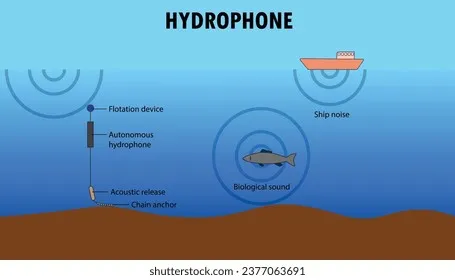
Photo: hydrophone recording ice lake winter field recording microphone snow, via www.shutterstock.com
The first thing you notice is that it doesn't sound like cold. It sounds like a door opening somewhere under the floor.
That's a lake in February, recorded a few metres from the ice edge with a hydrophone dangling into black water. The ice is expanding, or contracting, or doing whatever it does when the temperature drops eleven degrees overnight, and the resulting crack travels through the water as a low, elastic boom that no synthesizer has ever convincingly faked. Sound designers have been chasing it for years. In Canada, they can just go get it.
The Country as a Microphone
There's a lineage here. The World Soundscape Project at Simon Fraser University, and R. Murray Schafer before it, taught a couple of generations of Canadians to treat the environment as a composition rather than a nuisance. What's changed is the gear. A decent field recorder now costs less than a used guitar. Contact mics are disposable. A phone can hold a hundred hours of 24-bit audio. The result is a loose, geographically scattered scene of recordists, composers and game audio people who all seem to have a folder on a hard drive labelled ICE.
They record the obvious things — boots on packed snow, which has a specific squeak that depends on temperature and is nearly impossible to reproduce in a foley room. They record the less obvious ones: the metallic groan of a harbour freezing, the papery rattle of birch bark in a dry cold snap, the way wind behaves differently over a frozen field than over a forest.
How You Record a Season
There's a craft to it, and the craft is mostly suffering. Lithium batteries die in minutes. Cables go stiff as rope. Condensation forms when you bring gear inside, so everything lives in a sealed bag for hours before you dare open it. One recordist described taping hand warmers to a recorder body and burying the whole rig in a snowbank overnight, then digging it out at dawn to find the mic capsules fogged and the take ruined.
The good material is often violent. Abraham Lake's methane bubbles, famously photographed by every visitor to the Rockies, also produce a spectacular ice symphony when they shift and fracture, a run of chirps and lasers that sounds engineered. Prairie wind at −30 is a broadband roar with an almost subsonic floor that will eat a cheap preamp for breakfast.
From Field to Timeline
The ethics of using this stuff are more complicated than they look. Wind is not a sound effect; it's a habitat, and the people who record it seriously will tell you the difference between a gale that's just loud and one that's carrying something — a raven, a distant truck, the particular hollowness of a valley. Good composers leave that in. Bad ones scrub it out and end up with a generic whoosh that could be anywhere.
That's the line between a Canadian sonic vocabulary and wallpaper. The interesting work uses the specifics: the length of a northern winter, the way sound travels further in extreme cold because the air is denser, the eerie absence of insects. You can build tension out of that. Several Canadian game studios have, layering real winter recordings under interactive audio systems so that a player's footsteps change with the snow depth rather than the animation. Composers writing for picture are using it too, replacing string pads with ice drones and letting the environment carry the emotion.
Who Owns the Sound of Snow
Unsurprisingly, there's a growing argument about rights. Field recordings exist in a weird legal grey zone — you can't copyright a lake, but you can copyright a recording of it — and there's already a market for licensed "polar" and "tundra" packs assembled by people who have never stood in either. Some Canadian artists are pushing toward attribution norms, or toward recording material so site-specific that it can't be swapped out for a stock library file.
A Vocabulary, Not a Gimmick
The temptation is to treat winter as a brand. Snowflake graphics, a few icy plucks on a VST, done. But listen to the best of this stuff and it's not picturesque at all. It's abrasive, slow and a little hostile — a season that kills things, then quietly buries them in acoustic foam.
What's being built here is a language for a place most music doesn't bother to describe. Not the postcard. The actual thing. If you want to hear it, put on headphones in January, walk to the nearest frozen ditch, and listen for about four minutes without checking your phone. That's the source material. Somebody's already out there with a mic.