Small City, Global Stage: How Canada's Regional Festivals Became the New A&R
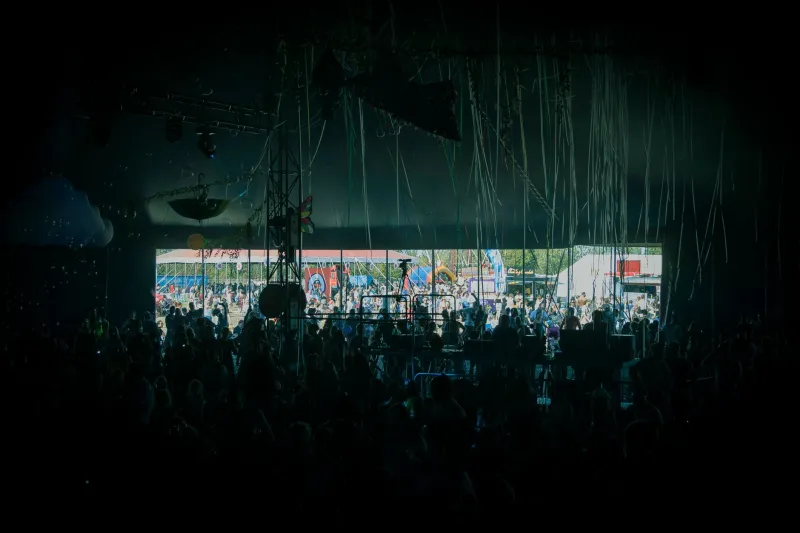
There's a moment that keeps happening at festivals in places like Sackville, New Brunswick, or Lethbridge, Alberta, or Thunder Bay, Ontario — a moment where someone pulls out their phone mid-set, hits record, and the clip ends up somewhere unexpected. Not on a label's radar. Not on a booking agent's desk. On a playlist in Berlin. In a Reddit thread in Seoul. On a Substack about emerging music that somehow has 40,000 subscribers.
This is the new discovery pipeline. And it runs straight through Canada's regional festival circuit.
The Circuit Nobody Was Watching
For decades, the conventional wisdom was clear: if you were a serious Canadian artist, you worked your way toward Toronto or Vancouver, you got on the right bills, you got the right industry eyes in the room, and maybe — maybe — you got a shot at something bigger. The regional festivals were stepping stones at best, dead ends at worst.
That calculus has flipped.
Festivals like Sled Island in Calgary, Evolve in Nova Scotia, and the Images Festival in Toronto have been doing something quietly radical: they've been building genuine communities of taste, both locally and online, that now carry real curatorial weight. When Sled Island puts an artist on a bill, that signal travels. Not because a label is paying attention, but because thousands of engaged music fans and culture writers are.
The difference between a gatekeeper and a discovery engine is intent. Gatekeepers decide who gets through. Discovery engines amplify what's already resonant. Canada's best regional festivals have become the latter — and the global audience has noticed.
Going Hybrid, Going Global
The pandemic broke something in the festival model, but it also cracked open a door. When live events went dark in 2020, the festivals that survived did so by streaming, by building digital programming, by finding ways to deliver the experience to people who couldn't be in the room. Some of those people were in other countries.
They didn't all leave when the rooms reopened.
Festivals like NXNE (North by Northeast) and the imagineNATIVE Film + Media Arts Festival have developed hybrid programming that treats their online audience as a legitimate constituency, not an afterthought. imagineNATIVE in particular has used its platform to connect Indigenous artists from Canada with audiences, curators, and collaborators in Australia, New Zealand, and across Latin America — relationships that simply wouldn't have formed through traditional distribution channels.
The model isn't just "stream the concert." It's building digital community infrastructure: Discord servers, newsletter ecosystems, year-round programming that keeps audiences engaged between editions. The festival becomes a brand, not just an event.
The Artists Who Skipped the Queue
Consider the trajectory of a Tiohtià:ke/Montreal-based electronic producer who played a small showcase at a regional festival in the Maritimes three years ago. She hadn't played Toronto. She hadn't done the industry circuit. But the festival had a partnership with a European booking collective that was actively scouting Canadian experimental music, and a thirty-minute set in a converted warehouse ended up being the thing that got her on a Berlin festival bill the following summer.
Or the Métis country-folk duo from Saskatchewan who bypassed the Nashville-adjacent Canadian country establishment entirely by playing the folk festival circuit in smaller Prairie cities, building a following that was deeply local and deeply online simultaneously. Their Bandcamp sales to listeners in the UK and Scandinavia now outpace their domestic streaming numbers.
These aren't flukes. They're a pattern.
What the Festivals Are Actually Building
The smartest regional festivals have figured out that their value isn't just programming — it's curation with a specific point of view. In a world drowning in content, a trusted curatorial voice is genuinely scarce.
Festivals rooted in specific communities — Indigenous arts, queer culture, Francophone music, experimental film — carry an authenticity that major industry showcases struggle to replicate. When an artist gets programmed by imagineNATIVE or POP Montreal or the Reelworld Film Festival, it means something. It's a signal to a specific, engaged community that this work is worth paying attention to.
Social media has amplified this. A well-shot clip from a set at a niche festival, posted by an artist with a few thousand followers, can outperform a press release from a major label if it hits the right community at the right moment. The festivals that understand this are building content strategies, not just event programmes.
The Community Partnership Piece
Another piece of the puzzle that doesn't get enough attention: the partnerships these festivals are building with local businesses, arts organisations, and community groups are creating infrastructure that makes discovery sustainable.
When a festival partners with a local record shop, a community radio station, and a university arts programme, it's building an ecosystem that generates attention year-round. The artists who come through that ecosystem get introduced to audiences through multiple touchpoints — not just a single performance.
This is the kind of thing that a major Toronto showcase can't easily replicate, because it requires genuine rootedness in a specific place and community. The regional advantage is real.
The Limits of the Model
None of this means the regional festival route is without friction. Funding remains a chronic challenge — the Canada Council and provincial arts councils are essential, but the grant application process is time-consuming and competitive. Many festivals run on volunteer labour and organisational goodwill that isn't sustainable indefinitely.
And the discovery pipeline, however real, is still uneven. An artist who goes viral from a festival clip still needs infrastructure — management, booking, distribution — that often requires engaging with the same industry systems the festival route was supposed to bypass.
But the shift is real, and it's directional. The festivals that are thriving aren't waiting for the industry to validate them. They're building their own credibility, their own audiences, and their own relationships with the global ecosystem.
The gatekeepers didn't disappear. They just stopped being the only door in the building.